


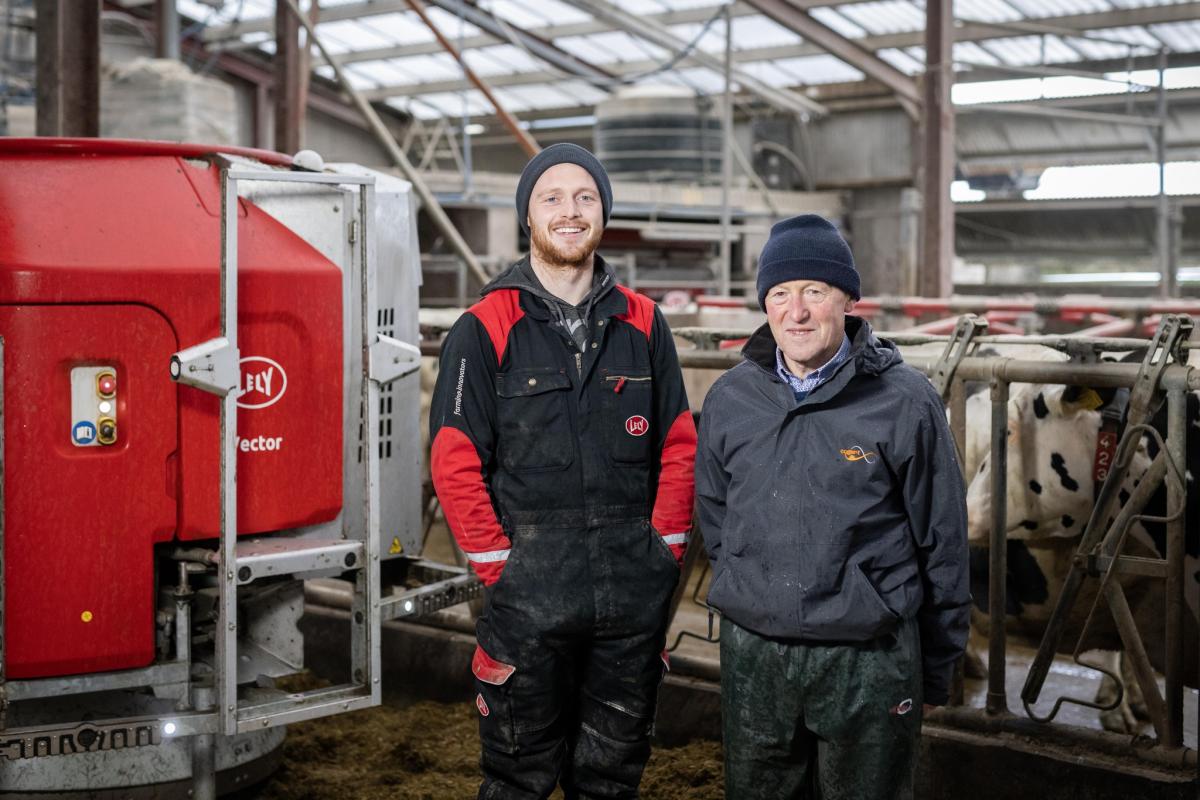
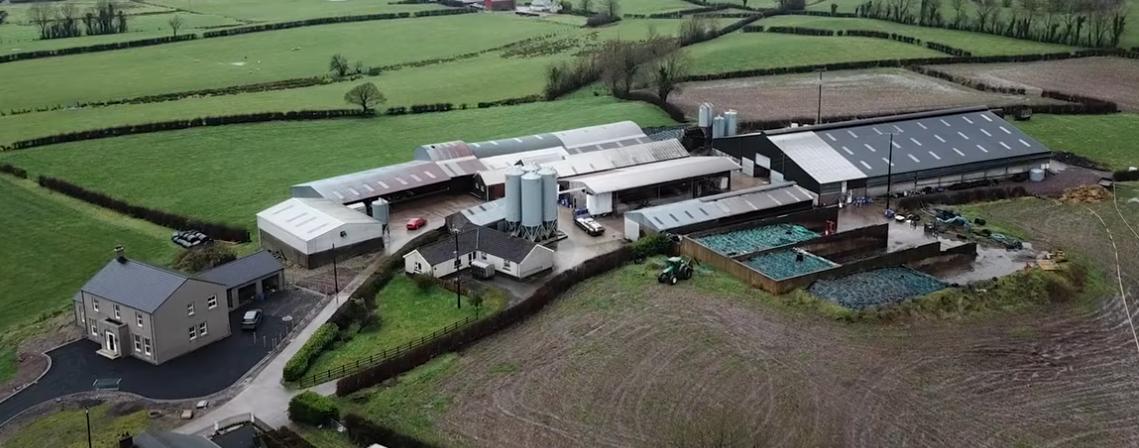

For Tyrone Eoin McCaffrey, the move to robotic milking was about more than boosting output - it was about building a dairy system that works for both his cows and his young family.
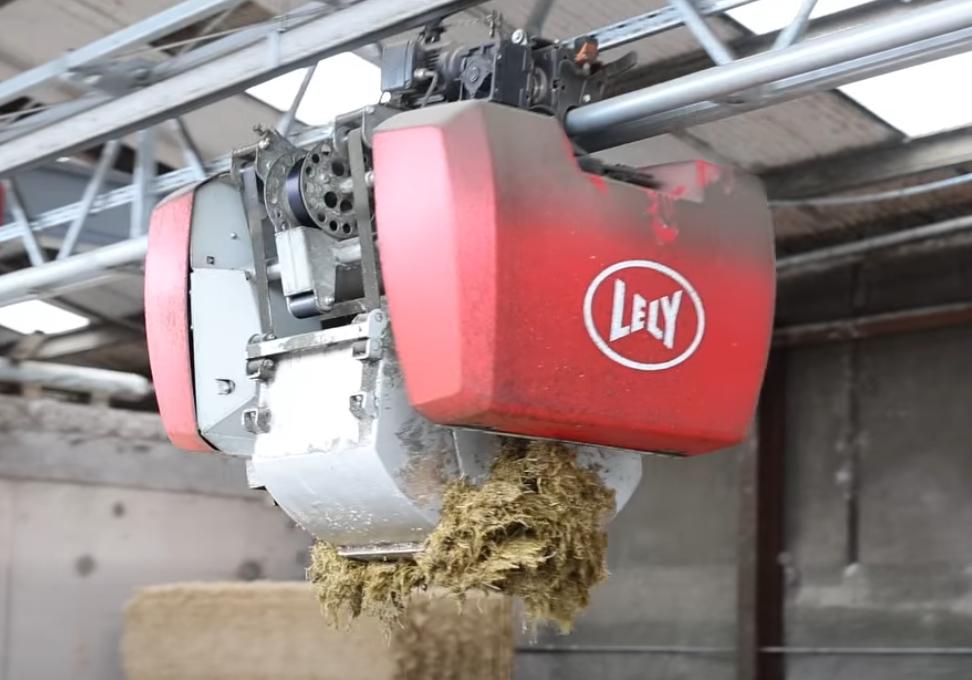
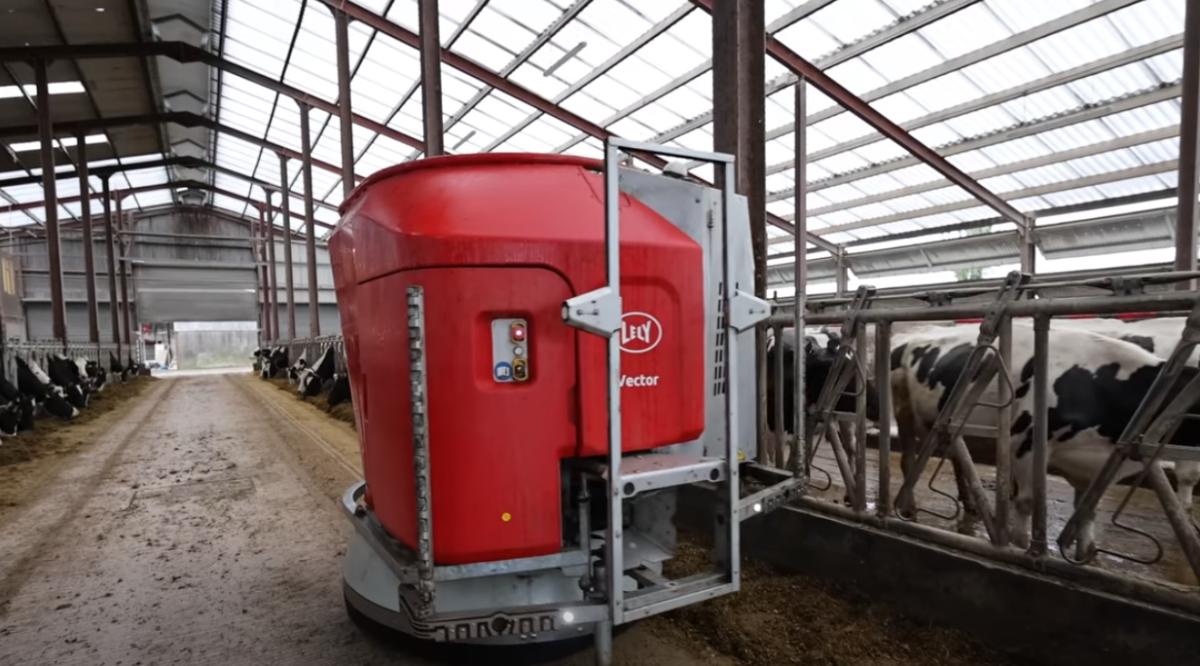
Farming in partnership with his father Seamus, Eoin now milks 200 cows using Lely robotic technology, with the farm currently operating one Lely A4 milking robot and three Lely A5 robots, alongside a Lely Vector automatic feeding system. T
The transition to robotics has transformed not only herd performance, but day-to-day life on the farm.
Eoin returned home in 2013 when his father underwent hip surgery. At this point in time, they ran a grazing-based herd.
“Dad had a hip operation and I came home to help out,” he recalled. “That’s when I really started milking and getting more involved in the herd.”
At the time, the 8,000-litre grazing herd was performing solidly, but Eoin saw scope to push yields.
By focusing on feeding to yield and keeping higher-producing cows closer to the yard, output climbed to 10,500 litres.
However, as the business grew, so too did family life.
“When our second child came along, I started thinking more about flexibility,” he explains. “I didn’t want to be tied to late evenings in the parlour and missing bedtimes. That’s what really pushed us down the route of robots.”
The first three robots were installed in August 2023.
At the end of November that year, a fourth unit was added, and more recently the Lely Vector feeding system was introduced. The herd is now fully housed.
“We knew what robots could do for us,” says Eoin. “My dad has always let me make the decisions. He’s very good at letting me take the reins with investing in what I think is right for the farm."
Cows are split into high yielders, low yielders and heifers, allowing the system to be managed efficiently and performance to be maximised.
But for Eoin, the biggest gain has been time.
“It gives me more flexibility in the day,” he says. “This morning, for instance, my wife had to be at a playgroup with our daughter for eight o’clock. I was able to head out a bit earlier and then be in the house for that time. Before, that just wouldn’t have been possible.”
He added: “If it’s a Sunday and we want to go away for the day, we don’t need to be back for five o’clock to start milking. Even in the evenings, I’m not tied to the parlour. I can organise my work around family time. It's that flexibility when you’ve a young family.”
Future-proofing the farm was another key driver. Eoin wanted a more efficient feeding system and greater control over input costs.
Building additional storage and running a feeder wagon himself would have required time he didn’t have.
“With a good milk price year, we decided to go down the Vector route and let it do the work for me,” he explains. “It gives me the option to feed straights and forward buy when prices suit, which can save money in tougher milk price periods.”
The shift to robotics has also allowed Seamus to step back from the physically demanding aspects of dairying.
“Going robotic has let Dad take a back step back, and not be as dependent on him. Now his big role is feeding calves.”
Far from stepping away entirely, Seamus remains a valuable sounding board.
“When you’re in a job every day, you can get blind to things you’re missing,” Eoin adds. “Dad is very good at pointing out where I need to up my game. He’s always there to make sure standards stay high.”
For the McCaffrey family, robotics have delivered more than increased production. They have created a system that supports growth, improves efficiency and, most importantly, allows time for family life alongside farming ambition.


Share