
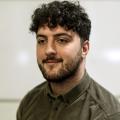


Growing up in South Armagh during the Troubles, Kenny Donaldson saw at close quarters how violence and division shaped everyday life. But alongside those experiences, his family instilled in him a belief in personal responsibility, compassion and the importance of living alongside people with different backgrounds.
Today, through his work with victims and survivors, he is determined to give people a voice and help younger generations understand the past without being consumed by it.
“I'm a proud South Armagh man, and I still say that,” says Kenny, whose farming family has 13 generations of roots in the area outside Crossmaglen.
Growing up with two brothers and a sister, he describes his childhood as “very enjoyable”, although everyday life during the Troubles brought its own challenges. A journey to school could involve several security checkpoints.
“If you would have taken a journey of 78 miles, you could have expected to have had maybe three security checkpoints along the way. We were never fearful of that; we anticipated that was what was required in order to keep one another safe.”
Read More
-
‘People couldn’t even plan Halloween parties’ due to Killeeshil odour issues
-
Planning applications will be reconsidered due to procedural concerns
-
Irish unity workshops praised by nationalists, dismissed by unionists
While neighbours could reach school within half an hour, Kenny travelled to Newtownhamilton Primary School and later Armagh Royal.
“We were away very early in the morning. I used to feel very deflated that neighbours could rock up at about 8.15 in the morning and then they were at their school within half an hour.”
At home, his parents instilled a strong sense of personal responsibility and compassion.
“We were brought up within a home where it was instilled within us that no one has a choice in what they are born. None of us. But we all have a choice in how we live.”
That outlook was evident following a powerful bomb explosion in Crossmaglen in the late 1980s, which killed two IRA members. Rather than celebrating their deaths, Kenny remembers his father's response: “There's more kids without dads.”
Another defining moment came on December 30, 1993, when Kenny, then 13, was in close proximity to the murder of a 22-year-old soldier in Crossmaglen. He says the experience “took away my innocence in many ways”, as he became aware of the wider community involvement surrounding the attack.
He also remembers walking around Armagh's divided Mall with a friend, enduring abuse from both sides.
“You know something? We're doing something right. They all hate us.”
Aged 17 when the Belfast Agreement was signed, Kenny was unable to vote but already had reservations about how victims and survivors were treated.
“It just didn't sit well with me that victims and survivors were written out of that agreement,” he says, believing they were being asked to carry too much of the burden of compromise. However, he recognises the “huge act of grace” shown by those who supported it in the hope that other families would be spared similar pain.
His decision to study journalism and politics was, in many ways, about finding a voice after growing up in a place where so many felt unable to express themselves.
“Trying to find your voice, and actually being able to articulate what you were feeling over those years,” he explains.
Kenny was determined to return home after his studies, but saw time in England as an opportunity to gain a different perspective on Northern Ireland.
“Once you get out of here, a lot of things start making more sense to you.”
While in Barnsley, South Yorkshire, he spent three years working as a bouncer. Kenny won a three-round arm-wrestling challenge against the considerably bigger head doorman to secure the job.
“Only one explanation, you must be a farmer,” the bouncer told him.
Working alongside two other men from different community backgrounds, Kenny found that outside Northern Ireland their differences meant little.
“They didn't distinguish between, ‘He's a Protestant and he's a supporter of the Union,’ and, ‘He's maybe a supporter of a united Ireland.’ We all spoke the same, we had the same humour.”
He recalls people in England often “walking on eggshells” around him, with some unable to distinguish Northern Ireland from the Republic.
“It was really basic-level, just shocking ignorance.”
After completing his degree, Kenny spent five years working with a rural support network in the Churchtown and Lurgan area, becoming its first Protestant employee. At one meeting, he recalls being introduced as a member of the Protestant community who was “from Crossmaglen, and he's all right”.
“I thank that man for that, because he was providing a reference for me as a person of standing within that community, and I never had a bit of bother.”
His eventual involvement with SEFF grew from experiences and beliefs that had stayed with him throughout his life. He felt victims and survivors had been poorly treated and too often portrayed as obstacles to peace.
“I always had it within me that victims and survivors have had a really bad deal here,” he says.
He joined SEFF in 2008, ten years after the organisation was established on the day of the Omagh bombing. Initially taking on a coordinator role, he wanted the organisation to look outwards and become more inclusive.
“The first step was: how do we make this organisation an inclusive place for people impacted by Republican violence from a Roman Catholic community?”
That approach extended to supporting people affected by Loyalist violence and innocent victims of criminal acts carried out by members of the security forces.
Kenny has witnessed a significant change in survivors' confidence. Many who once struggled to speak about their experiences now want to educate younger generations.
“People who were involved in those earlier days, they literally could not speak about the issues that had absolutely destroyed their lives. And now they want to educate young people about it.”
SEFF has visited around 30 schools in recent years. Kenny says pupils are often captivated by hearing directly from those affected.
“There's not a sound in the room whilst they're talking. They're absolutely captivated, because it brings it alive in a way a textbook never could.”
He wants SEFF to demonstrate that different cultural identities can coexist, with security force symbols, Gaelic symbols, Irish dancing shoes and Loyal Order symbols all represented. The challenge, he says, is to move beyond tolerance and value what different communities bring.
“How can people live in life and not alone tolerate each other, but actually value and celebrate what each other brings?”
Kenny also helped establish Innocent Victims United in 2012, bringing together 24 groups to give victims and survivors of Troubles-related violence a collective voice and ensure their experiences are not reduced to statistics.
In June 2025, SEFF rebranded from Southeast Fermanagh Foundation, recognising that its original name did not reflect the wider reach of its work. It adopted four guiding principles: supporting, empowering, fair and focused.
“If I want fairness in my life, I should also be standing by you as my neighbour, wanting fairness for you,” Kenny says.
“We don't use the term ‘cross-community’. It's about being good neighbours to one another.”
Kenny admits he was “quite embarrassed” to receive an MBE, seeing it as recognition of the work carried out alongside victims and survivors over two decades rather than a personal achievement.
“It's just a privilege that I'm able, in some small way, to walk alongside them,” he says.
He attended the Windsor ceremony with his parents and recalls a personal exchange with the King. Following the death of Queen Elizabeth II, it was the first Christmas without the monarch's mother, and Kenny offered his condolences.
“I'd be thinking of you too this Christmas, because this will be the first Christmas you'll be without your mummy,” Kenny told the King.
Away from his work, Kenny enjoys walking quiet beaches, discovering waterfalls, following boxing and listening to traditional Irish music. His Christian faith has become more personal in recent years, while time with family, particularly his nieces, nephews and goddaughter, remains important to him.
His experiences have, he hopes, taught him respect for humanity. He rejects the idea that Northern Ireland's divisions are simply about religion, arguing that the conflict has been rooted more deeply in territory and control. But whatever the constitutional future, he believes bringing people together must come first.
“Unity of land ... is nothing unless you have a unity of people. Because you're only going to trade one problem for another.”
For Kenny, the challenge is for people to recognise that nobody is going anywhere and that everyone has an equal right to live alongside one another.
His personal motto is simple: “Keep Focused, Ignore the Noise.”


Share